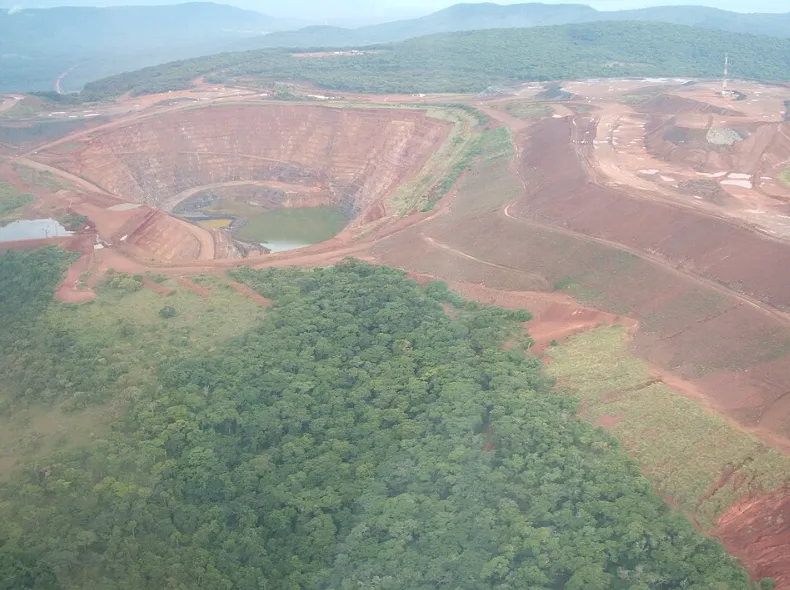
A project can create procurement demand long before a public tender appears—but a demand signal is not a tender. That distinction is central to useful mining intelligence.
Project stage changes the likely procurement mix
Exploration, construction, commissioning, steady-state operations and expansion have different needs. Exploration may emphasize drilling, geological services, camps and logistics. Construction can increase demand for civil works, power, transport, structural materials and project services. Operating mines require recurring maintenance, consumables, PPE, spares, laboratory services, logistics and specialist contractors.
Location matters
A supplier that can technically perform a job may still be a weak fit if mobilization, stock, response time or service coverage is poor. Regional intelligence therefore matters alongside category intelligence.
Tanzania’s geology creates multiple procurement ecosystems
The Geological Survey of Tanzania describes gold occurrences associated with Archean greenstone belts around the Lake Victoria region; nickel, cobalt, copper, tin and tungsten-bearing formations in north-western Tanzania; coal resources in southern Karoo formations; and a wide range of gemstones and industrial minerals across other geological settings. Different commodities and mining methods create different equipment and service requirements.
GST also reports geological mapping covering 85% of Tanzania’s 322 Quarter Degree Sheets, with maps available at several scales. Geological information is valuable for understanding mineral potential, but it should not be presented as proof that a procurement opportunity exists.
Four levels of opportunity confidence
| Signal | What it tells you | What it does not tell you |
|---|---|---|
| Project/asset exists | There is a real mining or development context | No specific procurement is confirmed |
| Demand signal | A category may be relevant to a known stage/activity | No tender or award is implied |
| Official tender/RFQ | A procurement process has been announced | No supplier is guaranteed to win |
| Award/contract evidence | A procurement outcome is documented | Future renewals are not guaranteed |
How suppliers should use project intelligence
Map your capability to projects where the category, geography and stage make sense. Then watch official procurement channels and maintain buyer-ready evidence. Do not spam every mine with the same capability statement.
Waridi Geo’s relationship model
The platform is structured to connect project → procurement demand → supplier category → capability → RFQ. Each relationship should become stronger as source-backed records are added. This lets users discover why a supplier may be relevant instead of relying on an unstructured directory.